WEDNESDAY 1ST
OCTOBER 2025
National Light Lamb Indicator, National Trade Lamb Indicator and National Heavy Lamb Indicator were all at record highs around June.
Seasons of dry conditions have lowered feed availability, reduced flock numbers and shrunk supply.
“This year’s lamb market proves that flexibility and creativity are critical and the venues that succeed will be those that can tell and sell the story of spring lamb…...” - Paul De Bortoli

SPRING HAS SPRUNG AND SO HAS LAMB
Earlier this year, Australian kitchens faced an unprecedented challenge. The price of lamb, one of our nation’s most celebrated proteins, surged to record levels making it also one of the most expensive, and prompting many venues to rethink how and when to offer this Spring favourite delicacy.
According to Meat & Livestock Australia (MLA), the National Light Lamb Indicator ($9.24 per kg of carcass weight), National Trade Lamb Indicator ($10.49 per kg of carcass weight) and National Heavy Lamb Indicator ($10.41per kg of carcass weight) were all at record highs around June.(1) Similarly, an ABC rural report showed that supermarket prices for a leg of lamb almost doubled from about $8 per kilogram in early 2024 to roughly $13/kg by mid-2025. Lamb chops also leapt from roughly $12.50/kg to $21/kg over the same period.(2)
The drivers behind these spikes were both global and local. Seasons of dry conditions have lowered feed availability, reduced flock numbers and shrunk supply. In parallel, strong export demand from China, the Middle East and the US especially has created fierce competition for available stock. At major sale yards such as those in Wagga Wagga, Griffith, and Bendigo, heavy lambs have sold in recent months between $424 and $431 per head, reflecting both local scarcity and premium export interest. This environment has created a tug-of-war between what local buyers can afford and what overseas markets are willing to pay.
With the recent onset of spring however, some of MLA’s latest market reports show heavy lamb indicators are retreating slightly from their extraordinary peaks. And while the sharp edge of the price spike appears to have softened, it is still far from cheap which is good news for Australian sheep, but more challenging for those venue operators who are managing these costs whilst meeting customer expectations on price, quality and seasonal offerings.
Despite this, spring lamb continues to capture attention on menus as the hero dish, thanks to its seasonal tenderness and delicate flavour, Leaning into storytelling around this and framing the offering to diners such that ‘this dish is only available while spring lamb is at its best’ can help add exclusivity to the menu. Also, consumers are increasingly conscious of where their food comes from and the environmental footprint attached to it, so featuring spring lamb alongside other local, seasonal produce reduces food miles and reinforces a commitment to responsible sourcing.
Cost efficiency is also factor operators can’t ignore. While lamb’s price volatility this year has been an exception, the general principle of aligning menus with seasonal supply often lowers costs, reduces reliance on imports, and minimises wastage. The natural rhythm of nature has supply naturally increases even if it is marginally, and with that, comes the potential for more competitive pricing.
“Timing is everything in food,” commented Paul De Bortoli, director of Tip Top Meats. “This year’s lamb market proves that flexibility and creativity are critical and the venues that succeed will be those that can tell and sell the story of spring lamb, while still balancing profitability and customer satisfaction.”
Looking forward to 2026, predictions vary. Some forecasts suggest supply deficits may persist, especially if seasonal and climatic conditions do not shift favourably. That means prices could hold firm or even push higher in specific weight categories. Assuming normal rainfall patterns however, there is a suggestion that lamb could fall to around an average annual price of 832 cents or within a range stretching from 695 to 970 cents.(3)
Nevertheless, these projections illustrate the profound influence that climate and seasonal timing, has on agricultural commodities and how the key to resilience for venues, distributors, and the broader supply chain, lies in market awareness, industry relationships and smart menu design.
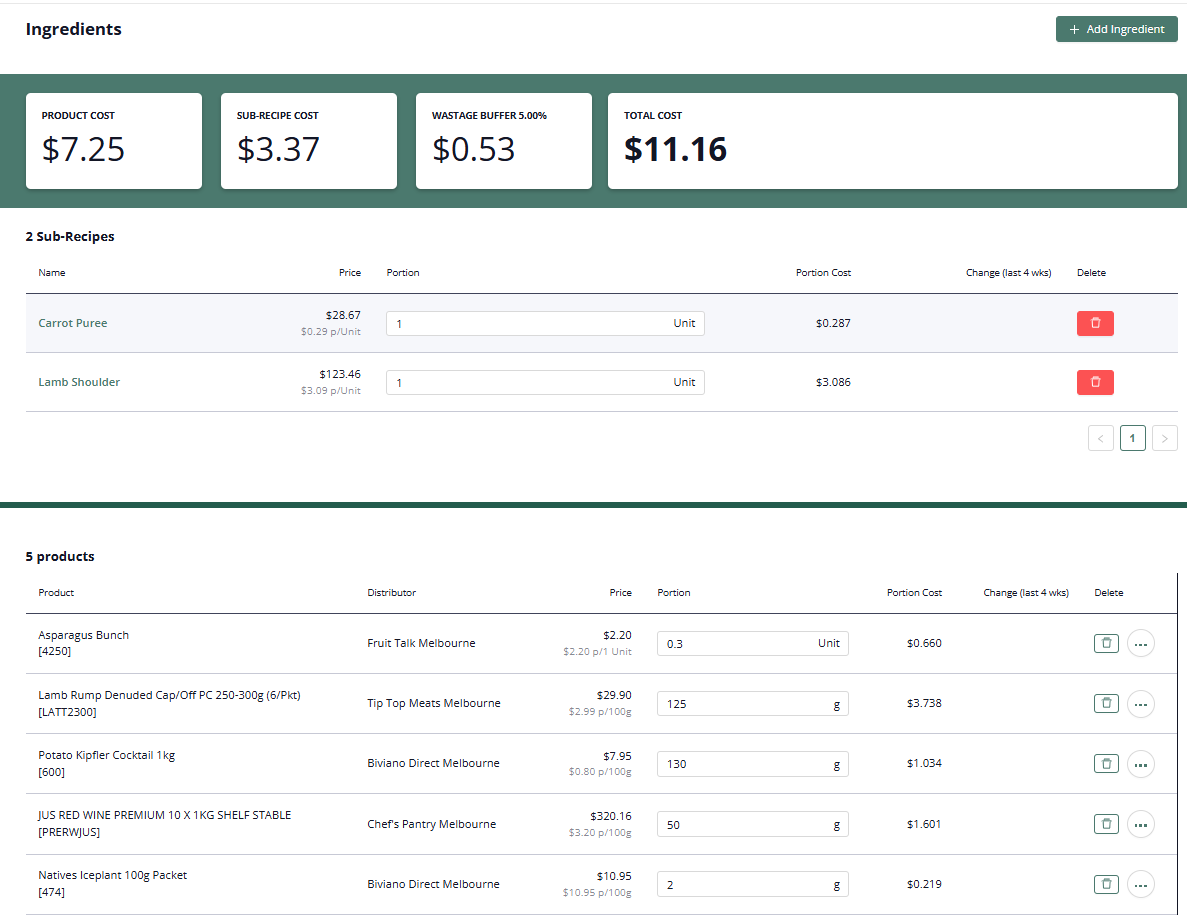
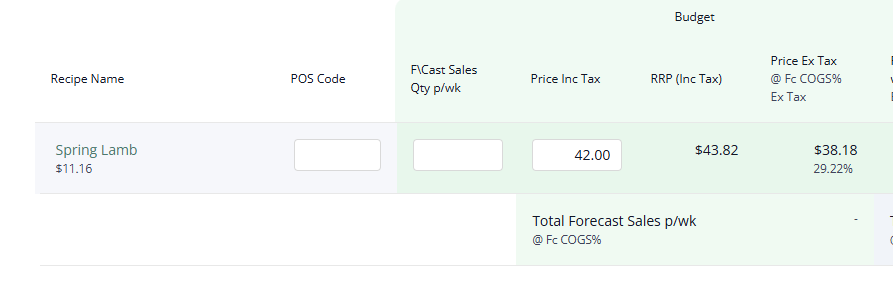
This spring lamb dish has been costed by our Client Success Manager, lain, who brings his expertise as a former chef to ensure accuracy and culinary insight. Reflected in the breakdowns shown in the following screenshots.
1 https://www.mla.com.au/news-and-events/industry-news/finished-lamb-prices-hit-record-highs-despite-tight-seasonal-supply
2 https://www.abc.net.au/news/2025-08-20/lamb-prices-rise-in-butchers-restaurants-supermarkets/105515532
3 https://pulse.auctionsplus.com.au/aplus-news/insights/lamb-fair-values-for-2025-and-beyond